Thursday, October 16, 2008

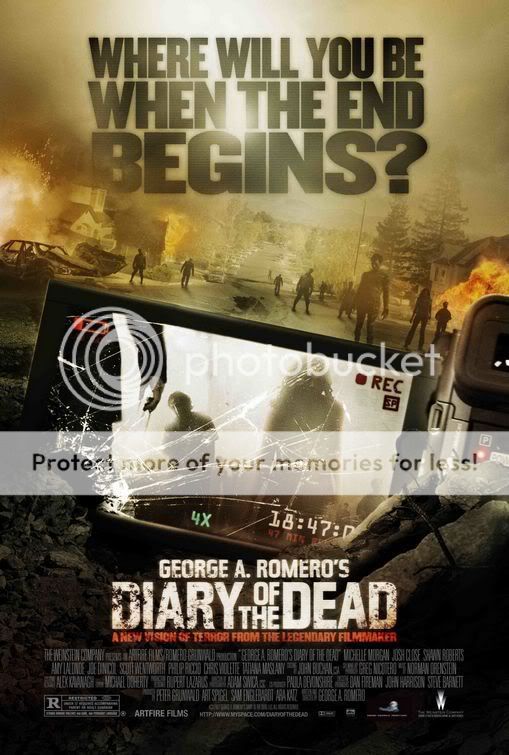
Diary of the Dead (2007)

For as long as I can remember, I’ve been a huge fan of George A. Romero. The original Dawn of the Dead is, and always will be, my favorite movie of all time . . . it’s as simple as that. The pictures Romero made from 1968’s Night of the Living Dead to 2000’s Bruiser may have their fair share of flaws and shortcomings, but I still like each and every one of them.

In 2005, Romero finally gave us his long-awaited fourth entry in The Dead Trilogy, Land of the Dead . . . and well, to say I was disappointed with it is a bit of an understatement. Even after Bruiser was released to pretty poor reviews in 2000, I defended Romero up and down, but with LOTD, I really do believe he lost some of the magic that made his earlier pictures so incredible.

The main thing that ruined LOTD (and George’s career) in my eyes was the blunt political commentary. Sure, the other Dead movies had some sort of social commentary, but maybe it’s just the fact that Romero finally had his own say about what’s going on today after every other bleeding heart liberal made their own movie, documentary, blog entry, or song. For the first time, I was truly seeing an innovator become a follower . . . it left an unforgivable negative impression on me.

When Diary of the Dead was announced, I really simply did not care about it in the least bit. Again, there was talk about how Universal and the big money people were at fault for LOTD’s dismal box office intake, so when Diary of the Dead was marketed as a return to Romero’s indie roots, I still didn’t even get excited about it. And, when it was given a limited theatrical release (only playing near me in NYC), I swore that there was no way in hell I’d travel out of my way to see it. Of course, it was released to pretty solid reviews from the Horror community and critics alike, praising its commentary on our society’s obsession with video-taping things and uploading them to Youtube or MySpace. Maybe it was worth checking out after all?

I finally saw it the other night . . .

Diary of the Dead tells the story of a group of college film students who are out to make a mummy movie for a senior thesis. As they run into production problems out in the middle of the Pennsylvania wilderness, they overhear some disturbing news on the radio about the dead returning to life and attacking the living. From there, they decide to flee and make their way “home” to see their friends and families . . . or at least see if they’re still alive.

Right from the get-go, Romero is already a mere follower – the much better Cloverfield was released shortly before Diary (this is the story of Romero’s life; Day of the Dead bombed because Return of the Living Dead was released about a month prior to its own release, effectively satiating moviegoers’ hunger for zombie carnage). Where Cloverfield succeeds – ie: making the film actually feel like one long hand-held video that was shot as all hell was breaking loose – Diary effectively cripples itself with some unneeded voice-over narration from Debra (played by Michelle Morgan). Many critics and reviewers who didn’t worship this movie simply because it had Romero’s name attached to it complained about how the narration immediately pulled them out of the film and distracted the experience. I agree. Morgan sounded more like a fifth-rate Sarah Connor impersonator here than anything else.

None of the characters are really likable (which is funny because that’s what almost every review of Day of the Dead claims is a low-point of that film…I, for one, love that movie) aside from Ridley (played by Phillip Riccio), Eliot (played by Joe Dinicol), and an Amish farmer played by R. D. Reid (of the 2004 remake of Dawn of the Dead remake). All of the other main characters are terrible clichés or they act out clichés: Josh Close plays Jason Creed, the stereotypical film student obsessed with becoming the next Spielberg (or in this case, the next Romero) and Scott Wentworth’s portrayal of film professor Andrew Maxwell, the drunkard who talks down to the kids about death feels like something we've seen dozens of times before.

A couple positive things worth noting here lie in the fact that Diary of the Dead isn’t merely a new sequel, but more or less an reinvention (sort of like Batman Begins maybe?) of the world Romero created in 1968. The initial outbreak and societal breakdown that was only alluded to in Romero’s earlier Dead series is finally given a glimpse here. As we see through the eyes of a television news crew covering a double homicide at an apartment building, there is still something refreshing about zombies with Romero at the helm! This scene definitely harkens back to Romero's glory days and easily could have been an outtake from the original Dawn of the Dead!


One really cool bit that I thought tied into the notion that Diary is essentially happening at the same time as the original Night of the Living Dead (aside from fashion, time and a correct year are never given in any of the original Dead pictures) was the inclusion of audio from one of the TV broadcasts the farmhouse survivors are watching – presumably coming from the same, live TV broadcast here in the new film.

As with any Romero movie, there’s always a sense of family among the cast and crew and, true to form, several familiar faces (or, in some cases, voices) pop up throughout the movie; F/X man Greg Nicotero, composer and “Screwdriver Zombie” John Harrison, “Butcher Zombie” Boyd Banks, Simon Pegg, Quentin Tarantino, as well as Romero himself.

While it’s impossible to really reinvent the wheel with a zombie movie, Romero does manage to come up with some new and interesting way to kill zombies; I’ll never look at a defibrillator in quite the same way again. And the way a character “buries” several zombies later in the film, is a welcome addition to the Dead mythos.

In the end, while Diary of the Dead has its moments, it’s still just a painful reminder of how great Romero’s past work is and that his continued mining of territory he’s excelled in before cannot repeat those previous successes. And with the announcement that Romero has made yet another Dead movie (sporting the original title of "George A. Romero's ...of the Dead), this movie hurts even more. Skip it!

Saturday, May 31, 2008

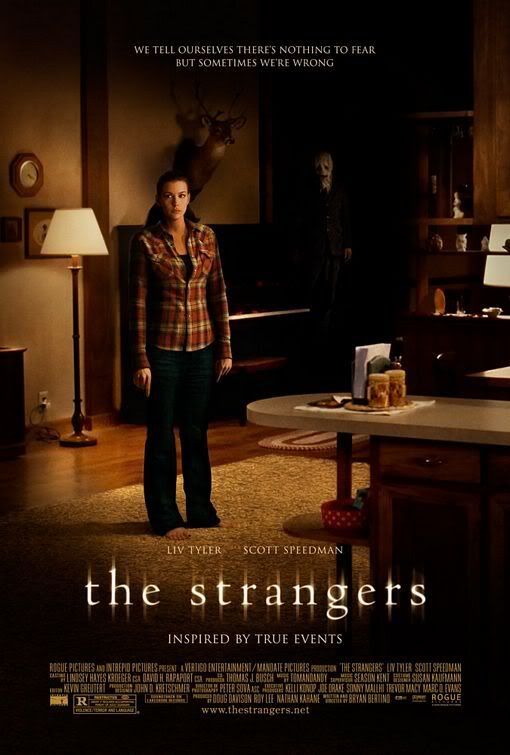
The Strangers (2008)

One thing that has always been disturbing about older Horror movies (say, from the 70s or early 80s) is that, save for a "star" who may be past his/her prime and they're trying to pay the rent with a quick paycheck, most of the cast is made up of unknowns. When an unfamiliar face is being terrorized on-screen, it's much easier to get lost in the movie and become engrossed in the tension that a skilled director can create from a really good screenplay. It also helps when the setting could be Your Town, USA.

The Strangers has been on my "To See" list for at least a year/year and a half since I first read about it in Fangoria magazine. After seeing Fango's stamp of approval on the article, my reaction to the masked characters was "Whoa. That's intense."


First time writer/director, Bryan Bertino, starts things off with an ominous voice-over about how the story is based on true events . . . as a fan of The Texas Chainsaw Massacre, this is a fine way to begin things as far as I'm concerned. If you're willing to actually get inside the movie and pay attention, it easily adds to the experience when you've got "this actually happened" in the back of your mind.

The story centers around James Hoyt and Kristen McKay (Scott Speedman and Liv Tyler, respectively), a couple who look as though they haven't been having such a wonderful night. They're barely speaking to eachother and one can't help but be interested as to what's going on with them and why they're in the state we find them in. Almost immediately, someone is pounding on the front door -- it's 4am, by the way -- and things quickly begin to spiral out of control.

For the most part, Bertino keeps things interesting despite the fact that only Speedman and Tyler are on-screen for the duration of the picture. And, people can say what they want about Liv Tyler, but she more than holds her own and easily plays against type in a role like this. Seeing a high-profile actress like Liv Tyler in a movie like this can always go either way, but I'd say things went more in the right direction for sure.

The violence is pretty intense, yet not overly gory. Honestly, if it can be compared to anything else, Wes Craven's Last House on the Left comes to mind. The level of on-screen violence here is in no way of the cartoonish variety found in a Friday the 13th or any other Slasher movie; in a sense, the audience is not cheering, applauding, or laughing at the setpieces. When things go down in The Strangers, it's not pretty and it's not a roller coaster ride. In fact, it's derivative of when Phyllis is killed in front of her best friend Mari while she watches helplessly in Craven's 1972 shocker. There's an overbearing sense of dread that hangs over the entire movie and it only continues to unsettle right to its grim and startling (albeit a bit cliched) conclusion.

As for the titular Strangers . . . wow. These characters are easily some of the most disturbing the Horror genre has ever seen. Their strength lies in their mystery and simple nature of their motive -- "because you were home." They will definitely make anyone think twice about locking every door in the house and checking tenfold.

Some may say that there's nothing we haven't seen before in The Strangers and, sure, that's true to an extent. However, it's really refreshing to see a Horror picture that at least strives to be suspenseful and work its way under the audience's collective skin. In a time of flashy, sporadically edited, cookie cutter movies, I welcome anything that breaks that mold.

All in all, if you're a serious Horror fan, this is just what the doctor ordered. See it!

Saturday, April 26, 2008

Just a quick update....

As you can see, I've been steadily adding some reviews here. I'm also going to be pulling older reviews from my archives either that I've posted on MySpace or on various message boards. So, those posts -- like Rob Zombie's Halloween, 30 Days of Night, and The Mist -- might feel a little dated as they were written right after seeing them in the theater. So, have a heart, and don't be too hard on them if there are any errors I may have missed in them.

Also, I'm going to be adding some short reviews that I've done based on the movies in my collection. Now when I say short, I mean, well they're shorter than the average review you might see on here or have come to expect from me. I usually write the short ones in one shot from memory and give the basics of the plot, what I thought of it, and whether or not you should see it.

Until next time . . . keep reading.

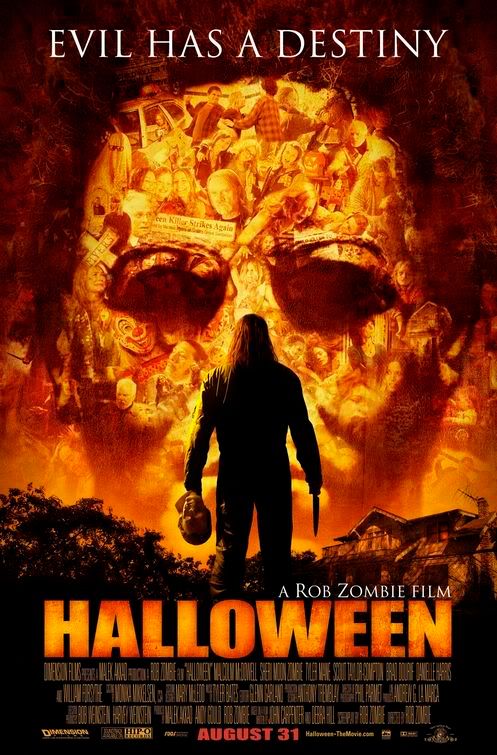
Rob Zombie's Halloween (2007)

I'm really, really glad that I didn't read any reviews or see any clips or see the final trailer before hand. It made it so much better. Without giving anything away of course, I thought Rob Zombie brought a fresh approach to a franchise that has frankly worn itself out. Come to think of it, regarding the original series' sequels, I don't think any of the directors ever really brought their own vision -- ie: something fresh -- to the formula. I guess what I mean, initially you had "John Carpenter's Halloween", but none of the sequels had a clear, identifiable signature on them from their given director in my opinion. Rob Zombie's Halloween, on the other hand, definitely accomplishes that.

I was also pleasantly surprised to see Rob's creative growth with this picture . . . granted, it's still not Oscar™ caliber stuff (hey, it's the Horror genre, folks), but much like the differences between House of 1000 Corpses and The Devil's Rejects, Zombie's added a few more notches to his belt as a writer/director. Yes, there are definitely some bits of dialog that "typical Rob Zombie", but in its defense I'll say it's perfect for the particular characters.

One thing that always seems to crop up within a successful Horror franchise is the inevitable and oft-dreaded backstory. The studio heads love it because it gives writers another angle to work and play with -- and make more movies based on -- and fans usually groan at it because it sheds too much light on their favorite masked men. Some of the early fears I heard regarding this movie and its prequel storyline were over giving Michael a reason why he kills. Right from the get-go though, I wasn't worried because Zombie's not the type of artist to say "Michael Myers kills his sister because his mom wouldn't buy him a candy bar." Yes, while we get maybe a clearer vision of young Michael's thought process behind his early deeds, there still is no clearcut reason why; and that's a great thing.

I'll admit, when I saw Daeg Faerch's first photo as Michael, age 10, I was skeptical as hell. But, I was really genuinely surprised by his performance. There were some truly terrifying and unsettling moments with him in the film . . . and, as intense as they were, I'll admit that I had a devilish grin. Another aspect I've heard some people were weary about -- specifically my hardcore Halloween fan of a cousin -- was some of the real life serial killer elements that Zombie added to the character. Trust me, you'll know what I'm talking about if you've read anything about Ed Gein, Ted Bundy, or Jeffrey Dahmer. From the moment I heard about this stuff, I wouldn't say I was necessarily thrilled, but I was definitely up for the angle of reality Zombie was going for. In the end, I thought it was a fine patch of character for young Michael.

Malcolm McDowell as Dr. Samuel Loomis . . . a fine choice of an actor to step into a role literally immortalized by the late Donald Pleasence. One thing I did know about the movie was that McDowell hadn't seen any of the original movies, so he had no idea how Pleasence played the character. I thought that was a great move on his part and brought a fresh, yet somewhat familiar, breath to the character.

Scout Taylor-Compton as Laurie Strode . . . listen, one thing about Slasher movies that I've always found a bit distracting is that they cast someone who obviously isn't 17 years old to play a 17 year old. That's always bugged the shit out of me and one major eye-roller is Peter Barton as "Doug" in Friday the 13th part IV: The Final Chapter -- the dude was 28 (!) when that movie was made and he's playing a "teen". Scout Taylor-Compton, though, actually is 18, so I noticed a particular teen element to her performance. Whether it was blatant or subtle, it's hard for me to pinpoint -- but I believed her character.

As anyone who knows anything about Horror movies or has seen either of Zombie's other two movies, you'd know he's got a thing for throwing in cameos from character actors of the 70s and 80s. He did it with The Devil's Rejects big time and here, he brings most of that cast back for brief cameo bits. Seriously, it's like a Who's Who of Genre Actors . . . and while I thought it'd be distracting as I'd heard a new name and face announced every week, surprisingly it wasn't. As corny as it sounds, it was kind of like seeing a bunch of old friends on-screen! There are so many times throughout the movie where I'm just sitting there nodding and smiling as one familiar face after another pops up on-screen in a memorable bit. One of those faces that stretches far beyond a cameo though, is Danielle Harris....

Danielle is the only actor in this movie to be an original Halloween series alum; she played Laurie Strode's daughter, Jamie Lloyd, in Halloween 4 and again in Halloween 5. Regardless of what any fans think of those two movies (I'd say 4 is better than 5 myself), one thing everyone agrees on is Danielle Harris. She's great in the role and brought something special to the later sequels. I've met her at a show a few years ago and she's such a cute little sweetheart -- she's literally 5' tall -- and seems like she's got a good head on her shoulders. She's of course been in other movies since her Halloween days, so it's been cool to see her move on, but always seem to keep showing some love for the series and the name . . . much like Jamie Lee Curtis has continued to do. And, going back to what I said about older actors playing younger characters, Danielle actually breaks that mold -- she just turned 30, but you wouldn't be able to tell! So yeah, I was thrilled when I'd heard she'd been cast as Annie Brackett for this movie. In the original, I thought Annie was incredibly annoying and boring, so I was kinda glad when she got killed off. Here, though, there's something likable about the character and I really did feel bad for her being thrust into Michael Myers' path....which brings me to another point.

When most people think of Slasher movies, they instantly talk about brainless teenagers lining up to be slaughtered by a masked killer. That's certainly true for the majority of the pictures that came out after the original Halloween; often times characters were introduced with a handful of lines, just so they could be added to the bodycount (I'm looking at you, Friday the 13th part V!!). Again, as I said Rob Zombie's Halloween sure ain't Academy Award-worthy Drama, but I'll be damned if he didn't try to infuse some sort of sympathy for the majority of the characters. Sure, this movie has characters who are introduced just to be killed, but the main characters are who I'm talking about. One thing that's so great about the original Halloween is how Haddonfield, IL is a "small, American town" that could be anyone's town. The babysitter characters seemed pretty genuine in that film and, maybe that's why it struck such a nerve with audiences in 1978. Here, the residents of Zombie's Haddonfield appear to be living in a peaceful world, relatively free of any real danger, with only schoolyard whispers of "the Boogeyman". I personally felt bad for a few of the characters as they had this monster break into their world and shake things up.

Speaking of the monster, let's talk about Tyler Mane in the lead role. This is another role I was pretty skeptical about when I heard he'd been cast. Tyler is famous for playing Sabretooth in the original X-Men movie, so naturally, he's a pretty massive dude to begin with. One of the great things about the original movie and Nick Castle's portrayal of the character was that he seemed like a normal guy. He was a regular build and, aside from the mask, didn't really have any imposing qualities the way Kane Hodder had when he played Jason Voorhees. But again, I was impressed with Tyler's performance as Michael here. I thought he brought his own take to the character, while bringing some qualities that nodded to Nick Castle's original version, too -- specifically in the way he walked and moved sometimes. And, wow, this Michael Myers is one baaaad dude!! He literally is a monster and, I think, truly terrifying. There are a few stalk scenes where he's doing stuff that, to me anyway, is right up there with The Shape stalking Laurie while she's hiding in the closet in Carpenter's movie.

Yet another hot topic of debate for any Halloween movie is always the mask. Lots of folks wonder why directors don't just use the original William Shatner mask in the sequels. The only one in my opinion to get it close was Halloween II. But, Wayne Toth certainly hit it pretty damned close with his version of the famous mask. I thought it brought back that eerie feeling most people get when they see that "blank, pale, emotionless face".

The original Halloween is relatively light on the red stuff, although it does have its share of what some fans pay to see -- blood and gore and T & A. Here, Zombie amps things up quite a bit (predictably too much in one department for some people...) and delivers. I thought the violence was pretty intense and realistically brutal; only serving the story and adding to the Michael Myers character.

There are also some interesting left turns Zombie takes with some of the characters, who, for long-time fans have become so familiar and dear. I thought this, too, was pretty cool. Specifically in Loomis, there's a different element to him that I think reflects what some doctors might do if they had a high-profile patient like Michael Myers.

In terms of Zombie's directorial style . . . I thought there were some pretty cool shots. Yeah, there is a bunch of hand-held, shaky camera-work that I'm sure will have a sector of people complaining, but what can you do? There were some interesting shots that, to me, recalled Kubrick's work on A Clockwork Orange, The Shining, and Full Metal Jacket, too. And, this has got to be intentional, but I swear there are a couple shots of the houses that seemed eerily similar to Carpenter's set-ups in his movie. Cool, nonetheless!

Overall, like I said . . . I'm incredibly pleased with the movie. I really loved it and plan on seeing it again tonight. Just at a quick glance, I popped over to my old stomping grounds at Fangoria.com and, sure enough, the movie is still a major hot topic (with 117 pages devoted to it, as of this original writing!) and it's largely spotted with negative criticism. One poster over there in particular makes me pretty gaggy with his pretentious and self-righteous takes on how "most horror fans are wising up to this kind've crap" (that's an intentional grammatical error). And, ya know, I gotta be honest -- I really don't understand what people can hate so much about this movie. Just in the few pages of that thread alone, I've seen people say how they felt dumber after watching this. Whatever. I think if you go into it wanting to hate it, you're most likely going to hate it. And, of course, on the flipside, if you go in wanting to love it, you probably will. I thought it was a great time at the movies personally and, sure, while it's got some flaws here and there, I still enjoyed myself and feel that Rob Zombie did a wonderful job. See it!

"Trick or treat, baby!"

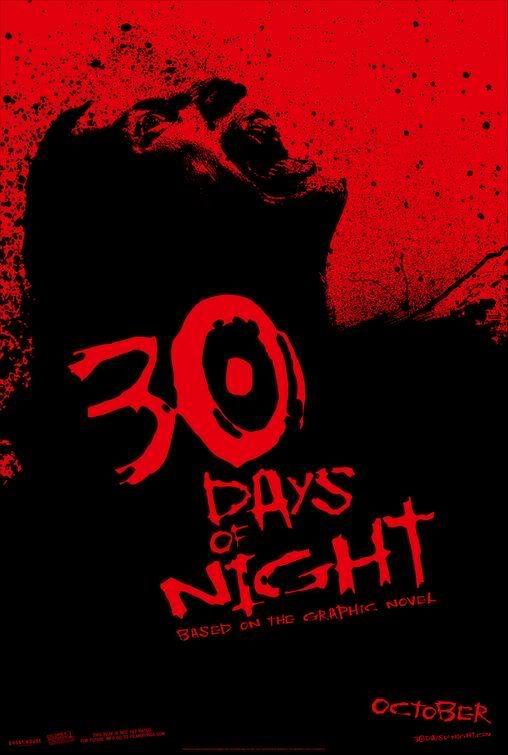
30 Days of Night (2007)

Two things entered my mind as soon as 30 Days of Night started:

1.) It’s “Fargo With Vampires...but not as funny.”

2.) The “vampires” themselves . . . I see an endless amount of ponytailed, trenchcoat-wearing, Mountain Dew drinking, video game playing, “graphic novel” reading fanboys and loners dressing/acting like these guys for years to come either at Horror and Sci-Fi conventions or, more disturbingly, in daily life. You know what I mean: after Bram Stoker’s Dracula and Interview With The Vampire, all the self-proclaimed “vampires” in real life started wearing John Lennon sunglasses and dressing like it was 1791.

For the better part of 2007, I’ve heard so much buzz about 30 Days of Night; that it’s completely original (because it’s a Horror movie set completely at night?), got a really cool premise (because it’s a town in Alaska where it’s night for a month...and vampires are on the loose?), and that according to the trailer it’s “based on the groundbreaking graphic novel”.

I may be in the minority since I’ve never read the original comic book -- face it, no matter what you call it, it’s still a comic book, okay? -- and I’ll admit that I’d never even heard of it before Horror websites started talking about the movie almost a year ago. On one hand, that’s probably a plus when coming into a movie like this. Most movies that are based on something preexisting that already has a rabid fanbase are usually met with cries of “they didn’t get it right!” . . . just look at any negative review at AintItCool of something based on a video game or comic book.

So, with that said, I went into the movie expecting nothing. I skipped the preview footage shown at Fangoria’s Weekend of Horrors earlier this year and somehow managed to avoid all of the clips and most of the photos found online.

There are some very nice Alaskan landscape shots (which are, evidently actually parts of New Zealand and some nifty effects work courtesy of Peter Jackson’s WETA crew) at the very beginning of the movie. The feeling of isolation is pretty rich, too, recalling John Carpenter’s The Thing.

Josh Hartnett stars as Eben, the sheriff of an Alaskan town which happens to be located at the most northern point of US territory, therefore bringing darkness for a month at a time. At first, Hartnett looks a little too young to be a sheriff; his boyish good looks, while sure to make the girls squeal, are distracting in a role where he’s supposed to be a bit of a conflicted person who's trying to make sense of what's happening to his town. Once the story got going though, and Eben interacts with Stella (played by Melissa George), Hartnett starts to pull things together.

I’ve heard a lot of talk about Ben Foster’s portrayal of the mysterious character known only as “The Stranger”. Honestly, his character was downright annoying. Not only is he absolutely disgusting to look at on-screen, he’s pretty difficult to understand with his mumble-mouthed accent (which, by the way, recalls some of the worst Maine accents from Stephen King adaptations). The performance just oozed with Foster trying too hard.

The vampires . . . or whatever they are, lead by Danny Houston’s “Marlow” character, while a valid attempt at doing something different with a monster that’s become as worn out as a pair of old Chuck Taylors, weren’t all that impressive. They were actually pretty annoying. As I said at the start, I kept seeing fans imitating these folks and their animal-like movements while trying to amp up their own coolness/danger factor. It just didn’t work for me. Early in the movie, I joked to my date that these guys must be European. I wasn’t sure whether I should laugh or be scared by their Klingon-esque language and high-pitched (ie: annoying) screeching. In literally every scene he’s in, Marlow has a wide-eyed and open-mouthed expression as if he just heard some news he can’t believe; “What?? You mean to tell me Rock of Love was a sham?? Get the fuck out!” The other three vampires shown the most were also sort of laughable; the hulking bald guy, a woman who could be a stunt double for Ginger Snaps’ Emily Perkins, and a guy who looked like a bizarre cross between Marilyn Manson, Josh Saviano, and Balki from Perfect Strangers (ie: one skinny nerd).

Rest assured, if there’s a sequel, I’m sure the story will somehow explore the background/origins of the vampires.

One powerful element in storytelling and movies is foreshadowing -- but only if its done subtly. Even though I thought The Sixth Sense was a fluke, it showcases M. Night Shyamalan's best Hitchcock-stealing suspense and use of foreshadow. In other movies, there may be something a character does or possesses that will come into play later on . . . that’s okay. But there’s something so blatantly shown in 30 Days of Night that screams, “Hi everyone, don’t worry....I’ll be used later on in the movie and everyone will cheer and clap.”

And while we’re on the subject of filmmaking techniques, can we all agree that shaky, hand-held camerawork doesn’t add tension, terror, or suspense? It just makes for a distracting image on-screen and, likely, hides some pretty hideous greenscreen work.

One thing 30 Days of Night does deliver with is the gore factor. As a lifelong Horror fan, it’s always nice to see a picture that more than earns its R-rating. That isn’t to say that gore makes a movie, but it’s certainly better to see a Horror movie that utilizes its special effects to the tilt rather than one that’s been watered down and severely cut to get a PG-13 rating in the hopes of catching a broader audience. With Peter Jackson’s WETA crew in charge, there’s at least one moment in 30 Days of Night that recalls the gonzo gorefest of 1992's Braindead/Dead-Alive.

There are some genuinely creepy moments peppered throughout the movie, but too many of them are diluted by quick cutting and an increase in volume to squeeze a reaction from the audience.

All in all, I’m sure I’m in the minority of people who maybe not necessarily didn’t like 30 Days of Night (because I kinda did), but who are a bit on the fence about it. It did well at the box office -- at least until the following weekend when Saw IV was released -- and will probably be followed by a sequel or become a trilogy.

So, if you don’t want to feel left out in water cooler or message board discussions about 30 Days of Night . . . see it!


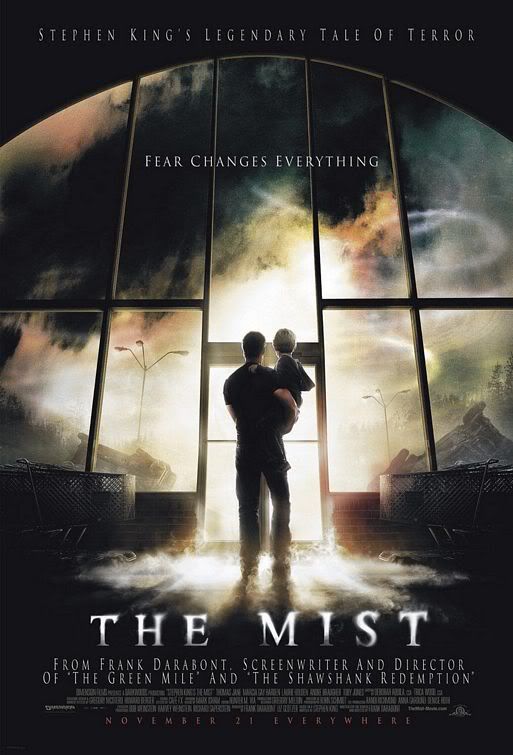
The Mist (2007)

It's no accident that Thomas Jane's David Drayton has the artwork for John Carpenter's remake of the Christian Nyby's The Thing From Another World hanging in his art studio. In 1951, that original Howard Hawks production banded a group of men -- scientists and military personnel -- together against a being from another world. In the time of the Cold War, these men were united as one against a being from "over there". Carpenter went one step further and pitted the protagonists against eachother for his remake. Simply stated, there was no unity. The tension was thick and the suspense unbearable. No one was to be trusted and fingers were pointing. No one was safe.

With stellar adaptations of The Shawshank Redemption and The Green Mile already under his belt, Frank Darabont has solidified himself as the quintessential go-to man for Stephen King adaptations. And, along with 1408 earlier this year, The Mist proves the "Stephen King Movie" has returned to its glory of the 1980s.


The story is simple: a freak storm rocks the small town of Castle Rock, Maine. The next morning, trees and wires are down, houses are destroyed, and a forboding mist has gathered on the lake, slowly making its way towards town. In an effort to continue with their daily lives, locals have converged on the town market, stocking up on supplies. Then the mist arrives.

In The Mist, writer/director Darabont does what George Romero did with Night of the Living Dead. That is to say, he presents a monumental castastrophe
which his characters have a difficult time trying to comprehend and survive. Using flesh-eating zombies, Romero had six characters to represent six different ways human beings might react to civil unrest, the Vietnam war, or the political assassinations that plagued this country in 1968. Here, Darabont has a stock of at least 50 different characters -- some main, some supporting -- to bring that idea into 2007 where the titular mist could represent any number of fears and frustrations that plague the American public. Fill in your own blank here...

Darabont, of course, also has an A-list cast to bring his story to life. Thomas Jane is common and sympathetic as Drayton; Andre Braugher is exactly as he should be as Brent Norton, the smooth-talking and hot-headed lawyer from New York; Toby Jones as the instantly likable Ollie; and Laurie Holden as Amanda Dumries, the surrogate mother figure to Dawtry's son. The standout performance belongs to Marcia Gay Harden as the Jim Jones-like Mrs. Carmody. Her performance is so jarring that it's simply terrifying how she spouts religious diatribes and manages to form a congregation in the back of a supermarket. As Darabont's script points out, people will follow whomever seems to have an answer in a time of crisis. When Mrs. Carmody's "visions" start to become realized, tension mounts and the rules of society are soon thrown out the window. Several characters decide something...anything needs to be done, as one character says, "before people start drinking the Kool-Aid."


Keeping in line with the "fill in your own fear or frustration" for the metaphorical mist, the picture's special effects leave something to the viewer's imagination. Yes, there are some impressive CGI and practical effects on hand, courtesy of CafeFX and KNB eF/X respectively, but there reamains an air of mystery to the things seen on-screen. Harking back to the days of The Thing From Another World, for instance, Darabont only gives us brief glances of several striking designs, effectively creating a scarier screen monster.


Working on a scant 37-day shooting schedule and $17 million budget, Darabount hired the cinematography crew from TV's The Shield. Ronn Schmidt and his crew often times improvised camera set-ups on the fly and this wise directing choice fully brings the audience into the supermarket. Throughout the picture, there are breathless moments of anxiety and tension, which are made even more evident by up close and personal cinematography. Like any director worth his weight in experience, Darabont knows he has control of his audience. He forces his viewers to bear witness first-hand to the events unfolding and, ultimately, to choose sides with the characters. In the end, much like Romero and Night of the Living Dead, he asks the question of "Who's right?", leaving the answer open-ended.


After a string of recent theatrical stinkers for the Horror genre, The Mist could very well be the "must-see" picture of the Fall. The ending is sure to be discussed (and possibly ruined by online chatter and bloggers) and debated. Frank Darabont's adapatation of Stephen King's The Mist is a fine picture made for Horror fans, but it also has the potential to be a mainstream and critical hit. See it!

Friday, April 25, 2008

28 Weeks Later (2007)


Almost immediately after Danny Boyle's 28 Days Later made a splash at the box office, rumblings of a sequel surfaced. And just as quickly, I was skeptical about it. That first picture was so incredible and appeared to have the same impact on pop culture that a George Romero movie may have had in the 70s. It was just perfect and it looked as if having a bigger budget might tarnish that vibe and the impact of the original...

Then I saw the teaser poster, which I've included here, in an issue of Entertainment Weekly. My jaw dropped and pretty much stayed there as I kept thinking of this poster. I wasn't sure whether I thought it was a rad nod or a blatant ripoff. But still, my attention had been grabbed.

If 28 Days Later is the original Night of the Living Dead, then 28 Weeks Later is the original Dawn of the Dead.

The best way to describe this sequel is that it's everything its predecessor was, but on a much bigger scale. Where Days, much like NOTLD, made its low budget work for it, but still suggested a bigger world outside of what was going on, Weeks brings everything to grander scale.

Taking place six months after (or 28 weeks later) the first movie, director/co-writer Juan Carlos Fresnadillo opens things with a few survivors in a darkened house. Among them is Robert Carlyle as "Don" and his wife. On the surface, it looks like a nice family dinner scene from a British movie playing somewhere in Princeton, NJ. No sooner do we get to know some of the characters, the Infected attack and Don's false sense of normality is torn to shreds before his eyes. Fleeing across the countryside with with hordes of Infected on his heels, Don escapes in a boat; leaving everyone -- including his wife -- behind to die.

Back in London, things are returning to normal as people are being let back into the city. Aside from a few not-so-clever barbs, the US military realistically has moved in to assist the Brits as they rebuild their lives. Of course, there are still areas that have been deemed off limits because of infection, but other than that, people are moving on. Don is reunited with his chidren, Tammy and Andy, as he struggles to break the news about their mum's whereabouts.
Of course, The Infected return as another outbreak rips through London. 28 Days Later really never lets up from the point where hundreds of Infected spill into an underground parking garage, as Don's children flee with a scientist and a soldier who's had second thoughts about his orders.
I've always said both 28 Days Later and 28 Weeks Later owe more to George Romero's The Crazies than they do to any zombie movie (because, let's face it people: The Infected are NOT zombies). One scene in particular that confirms this idea involves the Army pumping nerve gas into the streets. There's one shot where several soldiers walk out of a thick fog of gas and they're dressed in contamination suits (like the poster art...and like the military in The Crazies) and carrying flame-throwers. This is seriously such a creepy image . . . I can't quite explain it.
In the end, 28 Weeks Later is definitely a bigger movie compared to its predecessor. Does that make it a better one though? That's up to the viewer I suppose. I know I loved it. See it!